Georgia’s History:
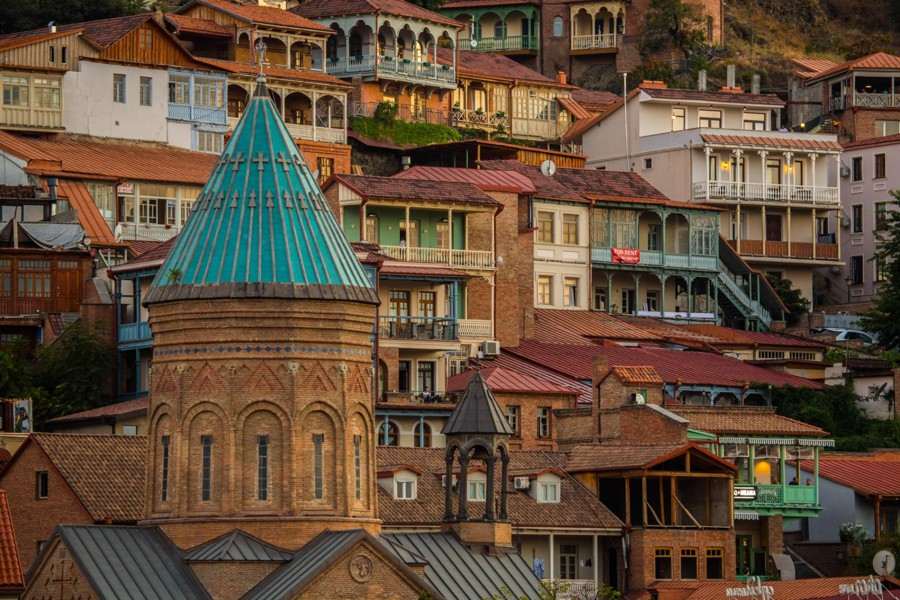
Georgia has a rich cultural heritage that is expressed in the original architecture of its churches, castles, and fortresses. The country is also known for its exquisite gold and silver jewelry, polyphonic songs, and uniquely painted icons. The Georgian people are noted for their courage, passionate love of music, dancing, poetry, and longevity. Every 51 of 100,000 people in Georgia are 100 years of age or more.
Ancient History through 1917
According to traditional Georgian accounts, Georgians are descendants of Thargamos, the great-grandson of Japhet, son of the Biblical Noah. The ancient name of Georgia was Colchis, which was associated for centuries with the Greek myth of Jason and his 50 Argonauts, who sailed from Greece to Colchis to capture the Golden Fleece. The legend describes how Medea, the daughter of the King of Colchis, assisted Jason in his adventure, but at the end was deserted by him. Colchis is historically recorded by Herodotus (484-425 B.C. ), Xenophon (c.430-354 B.C. ), and Josephus Flavius (37-95 A.D. ).
During the final decade of Soviet rule in Georgia, a third wave of immigrants—consisting of a few hundred men and women—came to the United States for economic, religious, educational, business, or family reasons. This wave consisted of both professionals and non-professionals and included persons from various ethnic groups within Georgia. There are between 3,000 and 3,500 Georgian Americans, the majority of which have settled in or around New York, Boston, Washington, D.C., Chicago, Detroit, Seattle, Atlanta, and Los Angeles.

Modern Era
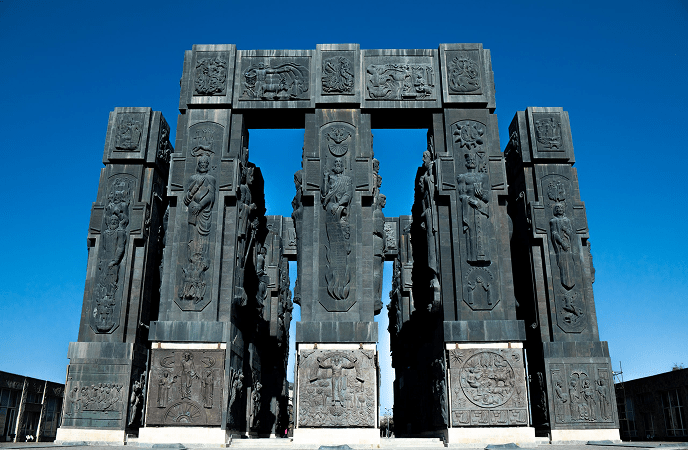
In 1918, Georgia became an independent state. However, three years later, the Soviet Red Army invaded Georgia and incorporated it into the Soviet Union. A rebellion that was designed to restore Georgian independence failed in 1924. In 1936, a new constitution was proclaimed and Georgia became a Soviet Socialist Republic under the dictatorship of Joseph Stalin (1879-1953), who was born a Georgian. Another Georgian, Lavrenti Beria (1899-1953), was a friend of Stalin and became the chief of NKVD, the Soviet secret police. Beria was notorious for extending Stalin’s regime of terror through executions, mass arrests, and deportations to vast labor camps known as gulags.
During the final decade of Soviet rule in Georgia, a third wave of immigrants—consisting of a few hundred men and women—came to the United States for economic, religious, educational, business, or family reasons. This wave consisted of both professionals and non-professionals and included persons from various ethnic groups within Georgia. There are between 3,000 and 3,500 Georgian Americans, the majority of which have settled in or around New York, Boston, Washington, D.C., Chicago, Detroit, Seattle, Atlanta, and Los Angeles.
Culture & People

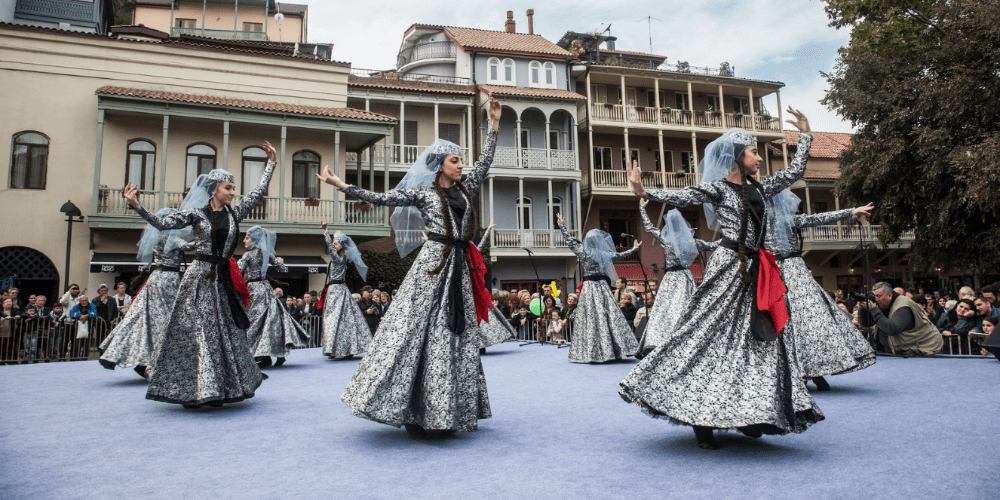
Rich Culture, Warm Hospitality
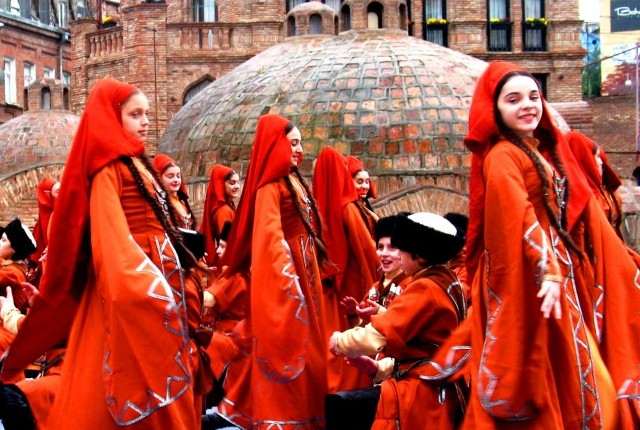
Georgian culture is celebrated for its diversity, hospitality, and traditions. Known as the birthplace of wine, Georgia boasts a culinary heritage that blends Eastern and Western flavors. The Georgian language and unique alphabet are central to its national identity, while music, dance, and art showcase the country’s vibrant spirit.
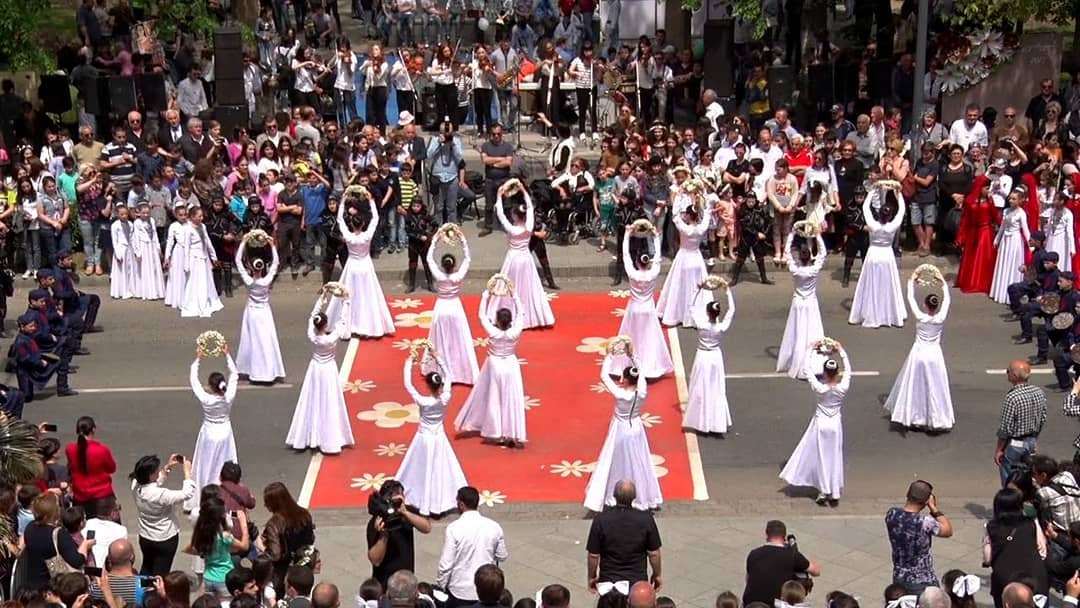
Georgia’s artistic identity is equally remarkable. Its polyphonic singing, recognized by UNESCO as an intangible cultural heritage, reflects centuries of musical tradition, while folk dances such as Kartuli and Khevsuruli embody both elegance and strength. Modern Georgian culture also thrives in literature, theater, and contemporary art, blending innovation with historical depth.
Georgia’s artistic identity is equally remarkable. Its polyphonic singing, recognized by UNESCO as an intangible cultural heritage, reflects centuries of musical tradition, while folk dances such as Kartuli and Khevsuruli embody both elegance and strength. Modern Georgian culture also thrives in literature, theater, and contemporary art, blending innovation with historical depth.
Georgian Proverbs
Georgians, like many other ethnic groups from Transcaucasia, are known for their many original proverbs. Examples include:
- Low places are considered high when high places are lacking;
- That which one loses by laughing one does not find again by crying;
- There is always a dirty spoon in every family; He who does not seek friends is his own enemy;
- If you put your nose into water you will also wet your cheeks;
- The cock cannot profit by the friendship of the fox;
- One blames one's friend to his face and one's enemy to his back;
- Don't spit into a well, one day it may serve to quench your thirst;
- It is better to drink water from a small spring than salt water from a great sea;
- The cart is heavy, but it makes the load light.