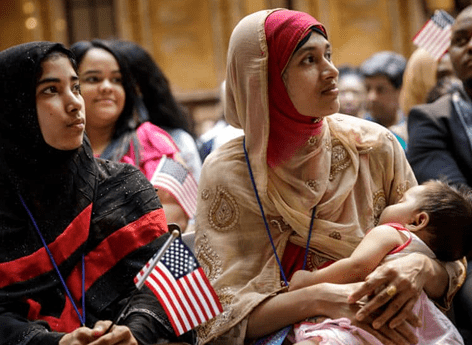
JOIN US IN BUILDING A STRONG US-GEORGIA LEGACY IN THE NAME OF A PEACEFUL & SAFER WORLD

Mission: Preserve and strengthen U.S. Georgian cultural, economic, business, investment & philanthropic relationships.
“Georgia, the historical gateway between East and West, has been a place of peace, security and prosperity for the Caucasus region and beyond - into Central Asia and greater Euro Asia. Our country, the U.S., remains the guardian of world peace which is as fragile today as it has ever been since the end of the Cold War. Strengthening the U.S. Georgia friendship and strategic partnership is the only hope for peace, security and prosperity in this critical region that is now being dominated by Russia and China.”
Giorgi Rtskhiladze, Founder, USA-Georgia Legacy Foundation
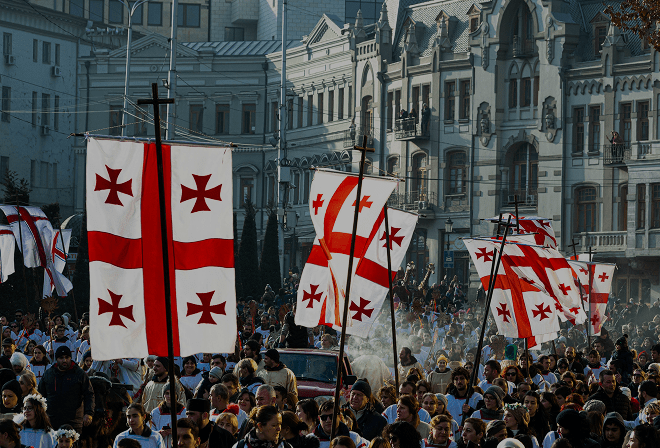
“After President Trump’s masterful work to forge long awaited peace deal between Georgia’s friendly neighbors Azerbaijan & Armenia, a peace between Georgian-Abkhazian and South Ossetian people is a must to restore Georgia’s historic sovereignty and ensure the united South Caucasus and U.S. partnership”
Giorgi Rtskhiladze, Founder, USA-Georgia Legacy Foundation
Solidify Georgia's role as a central hub for the expansion of U.S. economic interests in the entire Silk Road region, bolstering East to West peace and prosperity for the region’s 2.5 billion people.

USA Georgia Legacy Foundation

Georgia’s Importance to World Trade and Balance of Power

Georgia’s Role in Global Trade
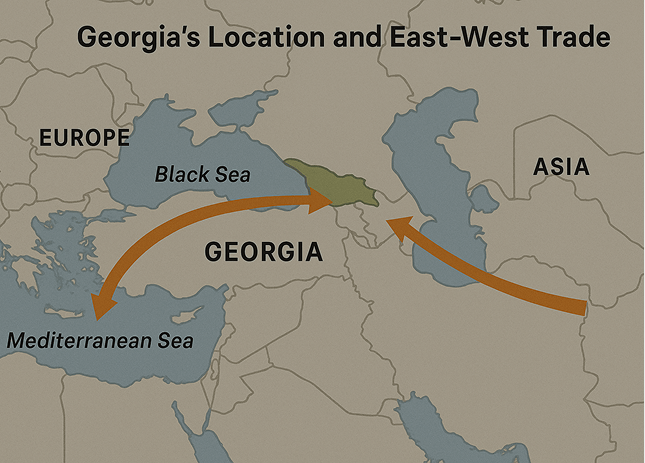
Georgia is critically important for geopolitical balance and trade between Asia/Central Asia, the U.S./West, and much of the globe. Historically Georgia has always been hugely important as a trade route between East and West. As early as the 6th and 7th centuries, it was an important alternative route for silk trade between China and the Byzantine Empire. Conflict between the Byzantine Empire and Persia made the traditional Iranian route less reliable, leading merchants to seek safer passage through the Caucasus. Georgia’s capital, Tbilisi became an important hub for trade and cultural exchange.
With the ongoing war in Ukraine, the landscape has changed dramatically in the region. Even if Ukraine were to retain most of its borders after the war, it would take decades to rebuild its infrastructure. It is already confirmed that new logistics routes (which are in fact the same ancient routes of the old silk road) are needed to move goods from Europe and China to other global geographies. Western routes through Afghanistan and Pakistan present challenges. China understands this and has invested billions into its One Belt, One Road initiative. They have already built a rail route to connect with Europe, which is also being challenged due to global conflict. To be sure, China understands the value of creating a reliable alternative corridor through Central Asia into the Caucus (Azerbaijain-Georgia).

U.S. – Georgian Relations: ~ $6B Invested by U.S.

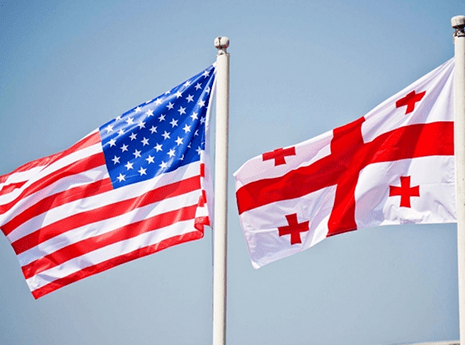
The U.S. has supported Georgia’s independence and integration into the Euro-Atlantic community since the dissolution of the Soviet Union in 1991. Over the past three decades, the US has provided significant support to Georgia across multiple areas.

Financial and Development Aid

Security and Defense Cooperation

Political and Diplomatic Support

Note: It’s important to note that the U.S. recently paused $95 million in aid to Georgia after the Georgian parliament passed a “foreign agents” law, which the U.S. sees as incompatible with EU and NATO norms and potentially hindering Georgia’s Euro-Atlantic aspirations. Despite this, the U.S. remains committed to funding programs that support democracy and the rule of law in Georgia. 

Contributions of Notable Georgian Americans to the U.S.
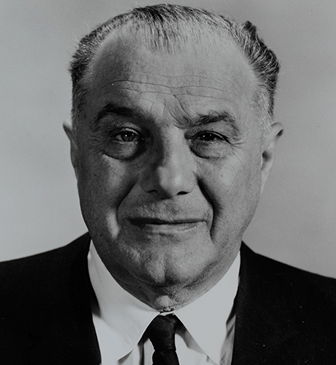
Alexander Kartveli

Alexandre Kartveli was a Georgian aeronautical engineer and an aviation pioneer in the U.S. Kartveli achieved important breakthroughs in military aviation in the time of turbojet fighters.
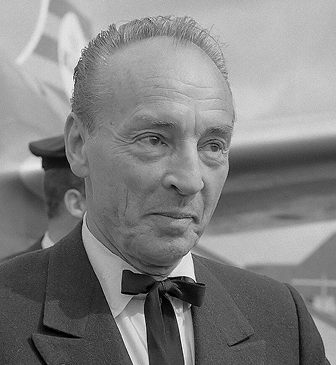
George Balanchine

Founder of the New York Ballet theater
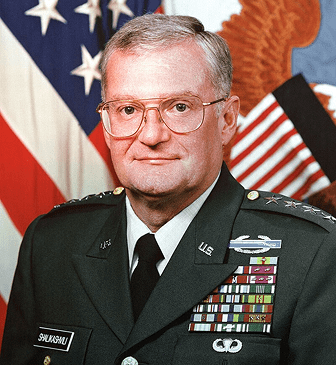
John Shalikashvili

a United States Army general who served as Supreme Allied Commander Europe from 1992 to 1993 and the 13th chairman of the Joint Chiefs of Staff from 1993 to 1997
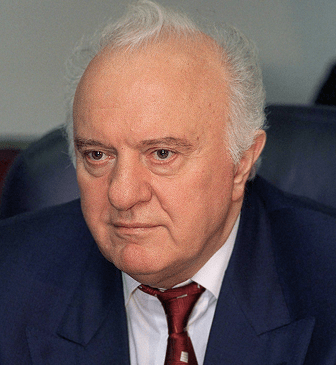
Eduard Shevardnadze

worked with President Reagan to end the cold war
Contributions of Notable Georgian Americans to the U.S.

Alexandre Kartveli was a Georgian aeronautical engineer and an aviation pioneer in the U.S. Kartveli achieved important breakthroughs in military aviation in the time of turbojet fighters.
George Balanchine – founder of the New York Ballet theater
John Shalikashvili  – a United States Army general who served as Supreme Allied Commander Europe from 1992 to 1993 and the 13th chairman of the Joint Chiefs of Staff from 1993 to 1997
Eduard Shevardnadze – worked with President Reagan to end the cold war
Georgia Facts/Demographics

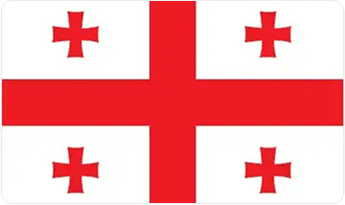
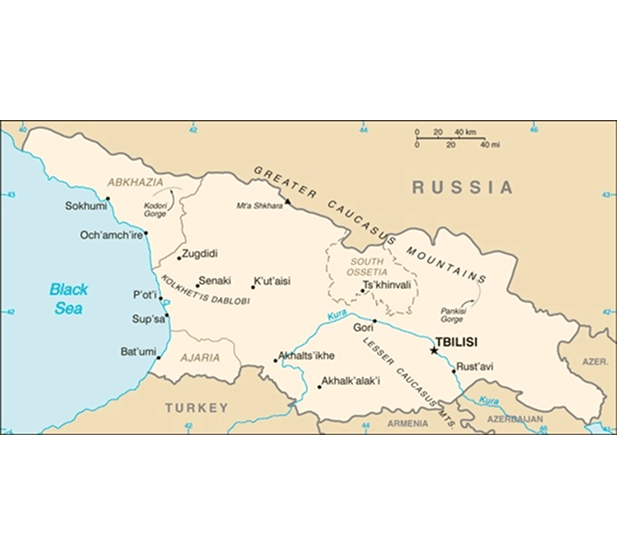
Georgia is a European country called Sakartvelo by Georgians.
Georgia is bounded by Russia to the north and northeast, Azerbaijan to the east, the Black Sea to the west, and Armenia and Turkey to the south.

Land Mass: ~27,000 sq miles (~69,790 sq km)

It is almost half the size of Illinois and is located in the mountainous region of Transcaucasia. (show super-composed map of country of Georgia on states of US map)

Population: 4.9 million; (2024 est.)
Ethnicity: Georgians 86.8%, Azerbaijanis 6.3%, Armenians 4.5%, other 2.3% (includes Russian, Ossetian, Yazidi, Ukrainian, Kist, Greek); (2014 est.)
Language: Georgian (official); Russian is a common second language
Religion: Eastern Orthodox Christian (official religion) 83.4%, Muslim 10.7%, Armenian apostolic Christian 2.9%, other 1.2% includes (Roman Catholic, Jehovah’s Witness, Yazidi, Jewish and Protestant Christian); (2014 est.)
Real GDP Growth Rate: 9.40% (2024 est.), 7.83% (2023 est.), 10.96% (2022 est.), 10.64% (2021 est.)
Inflation (consumer prices): 1.1% (2024 est.), 2.5% (2023 est.)
Georgia’s Historical Ties to the U.S.

The Georgian presence in America began in 1890 with the arrival of 12 Georgian Cossack horsemen hired by Buffalo Bill Cody and his Wild Congress of Rough Riders. The Cossack horseman successfully competed with talented horsemen from Mexico, Argentina, France, England, Spain, and the United States. Under the leadership of Prince Ivan Rostromov Marcheradse, the Georgians charmed audiences with their energy, style, and riding skills. In 1910, a second group of 30 Georgian male and female riders successfully performed with the Ringling Brothers Circus. A third group of nearly 50 Georgians were hired as laborers to work on the West Coast railroads.
Shortly before World War I, a few dozen Georgians returned to their native land, while those who decided to settle in America formed the nucleus around which the Georgian American community developed in later years.

Immigration to the U.S.

Following the Soviet invasion of Georgia in 1921, hundreds of families, fearing repression by Communist authorities, became refugees abroad. About 200 Georgian refugees, including former political leaders, members of aristocracy, and military officers, came to the U.S.. Unable to speak English and lacking financial resources or help from charitable organizations, many Georgian refugees had a very hard time adjusting to their new life in the U.S.. Some gave up their professional occupations to take menial jobs, while others with aristocratic titles married wealthy American women. Those who could not cope with life in America returned to Europe and joined other Georgian refugees who established themselves in Germany, France, Poland, Turkey, and Belgium.
A second wave of Georgian refugees in the U.S. was recorded after World War II. More than 250 men, women, and children came to the United States by virtue of the Displaced Persons Act of 1948 and the Refugee Act of 1953. Several were former prisoners of war who feared reprisals if they returned to the Soviet Union. There were also some Georgians who lived in Europe as refugees from the Soviet Union before the start of World War II. These new immigrants, unlike the first wave, received assistance from various charitable and non-profit organizations, including the Georgian Association in the United States and The Tolstoy Foundation. Many immigrants from this second wave were skilled workers, professionals, military men, and clerical workers, and found it relatively easy to adjust to their new homeland.
During the final decade of Soviet rule in Georgia, a third wave of immigrants—consisting of a few hundred men and women—came to the United States for economic, religious, educational, business, or family reasons. This wave consisted of both professionals and non-professionals and included persons from various ethnic groups within Georgia. There are between 3,000 and 3,500 Georgian Americans, the majority of which have settled in or around New York, Boston, Washington, D.C., Chicago, Detroit, Seattle, Atlanta, and Los Angeles.

Acculturation and Assimilation in the U.S.

Georgian Americans have preserved their heritage and culture through various organizations. As early as 1924, Georgian organizations were founded in San Francisco and in New York City. These organizations held cultural activities and social gatherings, and provided assistance to other immigrants. Between 1955 and 1975, the Georgian American press was very active. Kartuli Azri (Georgian Opinion) was the most popular newspaper and was it was heavily supported by donations from Georgian Americans. Over the years, Georgians have been fully assimilated into American culture. However, Georgian Americans continue to proudly preserve many aspects of their unique culture.
Scroll to Top